partnerships
The Partnership You Sign When the Business Feels Threatened
When survival anxiety reaches a certain threshold, founders stop evaluating partners and start collecting them. The 2026 data on why that is the most expensive thing they do.
partnerships
When survival anxiety reaches a certain threshold, founders stop evaluating partners and start collecting them. The 2026 data on why that is the most expensive thing they do.
partnerships
Founders leave first partnership meetings with genuine optimism and land in silence two weeks later. The deal did not die when the partner stopped responding. It died in the meeting everyone left feeling good about.
partnerships
Founders tell themselves the partnership stalled because the partner went cold. The actual sequence usually runs the other direction, and the data from 2026 is making the pattern harder to ignore.
partnerships
Most partnership deals die after the first meeting, not during it. Founders spend their best energy on the pitch and leave the internal review process entirely to chance.
partnerships
Partner-led growth now accounts for 30 to 50 percent of total revenue for leading B2B companies. The stakes of getting selection wrong have never been higher. The methodology most founders are using was built for a world where partnerships were optional.
partnerships
Sixty-nine percent of companies plan to increase their investment in partnerships this year, and only 42% of them have any reliable way to measure whether those partnerships are generating revenue. That gap, between commitment and accountability, is where most partnership strategies quietly collapse. The data comes from PartnerStack'
partnerships
Ask any founder why their last partnership failed and you will hear some version of the same story: "We were aligned at first. Then priorities shifted. They stopped responding." What you rarely hear is the more honest version: "I chose the wrong partner because I trusted the
deal-making
Most founders I talk to have the same post-mortem story. A partnership falls apart and they spend weeks replaying what went wrong. They blame the partner. They blame the market. They blame timing. And occasionally, after enough distance, they admit they are not sure what actually happened. That is
partnerships
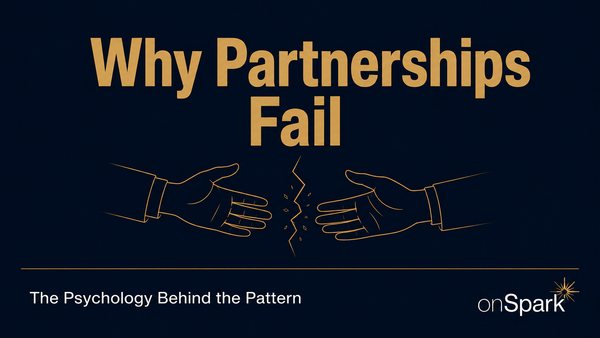
I have watched founders sign partnership agreements with people they knew, somewhere below the surface of a productive conversation, were not the right fit. The contracts were tight, the financial upside was real, and the initial energy was exactly the kind that makes you schedule a follow-up before you
partnerships
The industry is betting more on partnerships than ever before. The failure rate has not moved. What the data reveals about scaling a motion before fixing the thing underneath it.
partnerships
Founders are announcing partnerships the way they used to announce funding rounds — with the same language about synergy and aligned values, and the same conspicuous absence of revenue attached to any of it.

partnerships
Sixty-nine percent of companies are increasing partnership investment this year. Only 42 percent can tell you which ones are generating revenue. That gap is not a measurement problem. It is a decision problem.